

Patch Please!
30-Day
Mood Reset Guide
Your daily routine for a calmer, brighter mood with the Mood Please Patch. Small steps, one day at a time.
Your daily routine for a calmer, brighter mood with the Mood Please Patch. Small steps, one day at a time.
Maybe you know the feeling: the days blur together. Your energy dips in the afternoon. Little things feel heavier than they should, and the things you used to enjoy feel a bit flat.
You're not lazy and you're not "doing it wrong". Mood is shaped by a lot of quiet, everyday things: how you sleep, how much daylight you get, how you move, what you eat and who you talk to.
The good news: small, daily habits add up.
This guide gives you a simple 30-day routine. One focus per week, a few tiny habits per day, and your Mood Please Patch as the easy anchor that starts each morning.
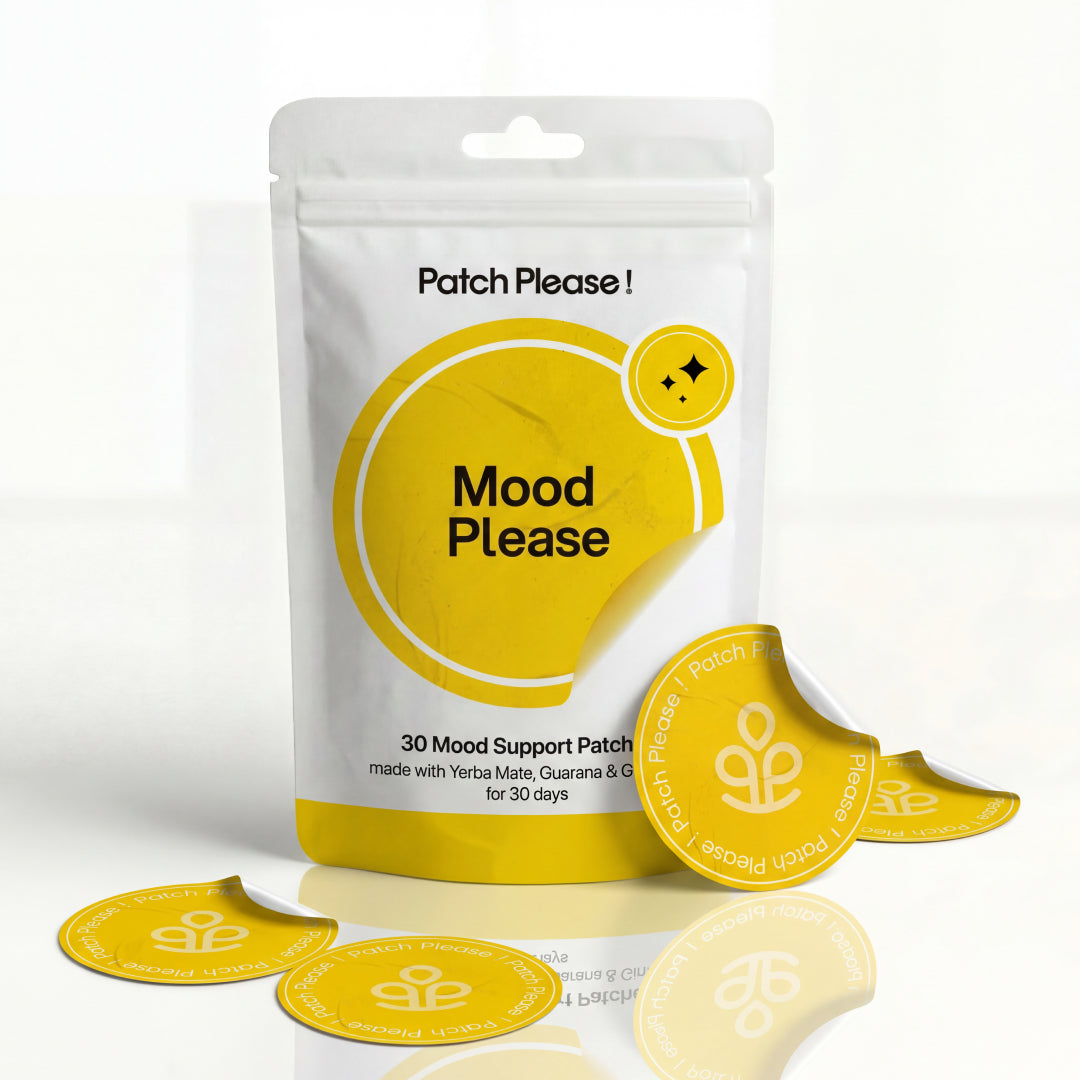
Mood Please is a small, discreet patch you stick on your skin in the morning. It delivers 6 mood-supporting ingredients through the skin with an 8-hour steady release, so you get gentle support through your day instead of a quick up and down.
It supports serotonin & dopamine, your brain's natural feel-good chemicals. No pills to swallow, no water, nothing to remember at lunch.
The patch is your anchor, not the whole plan. Think of it as the first small win of the day. The habits in this guide (light, movement, sleep, food, connection) are the other half of feeling more like yourself.
The 5-second routine: peel, stick, forget.
Take one patch and peel off the backing. Try not to touch the sticky side.
Choose clean, dry skin with little hair: inner wrist, upper arm or shoulder. Press firmly for about 10 seconds.
Go about your day. Remove the patch after about 8 hours.
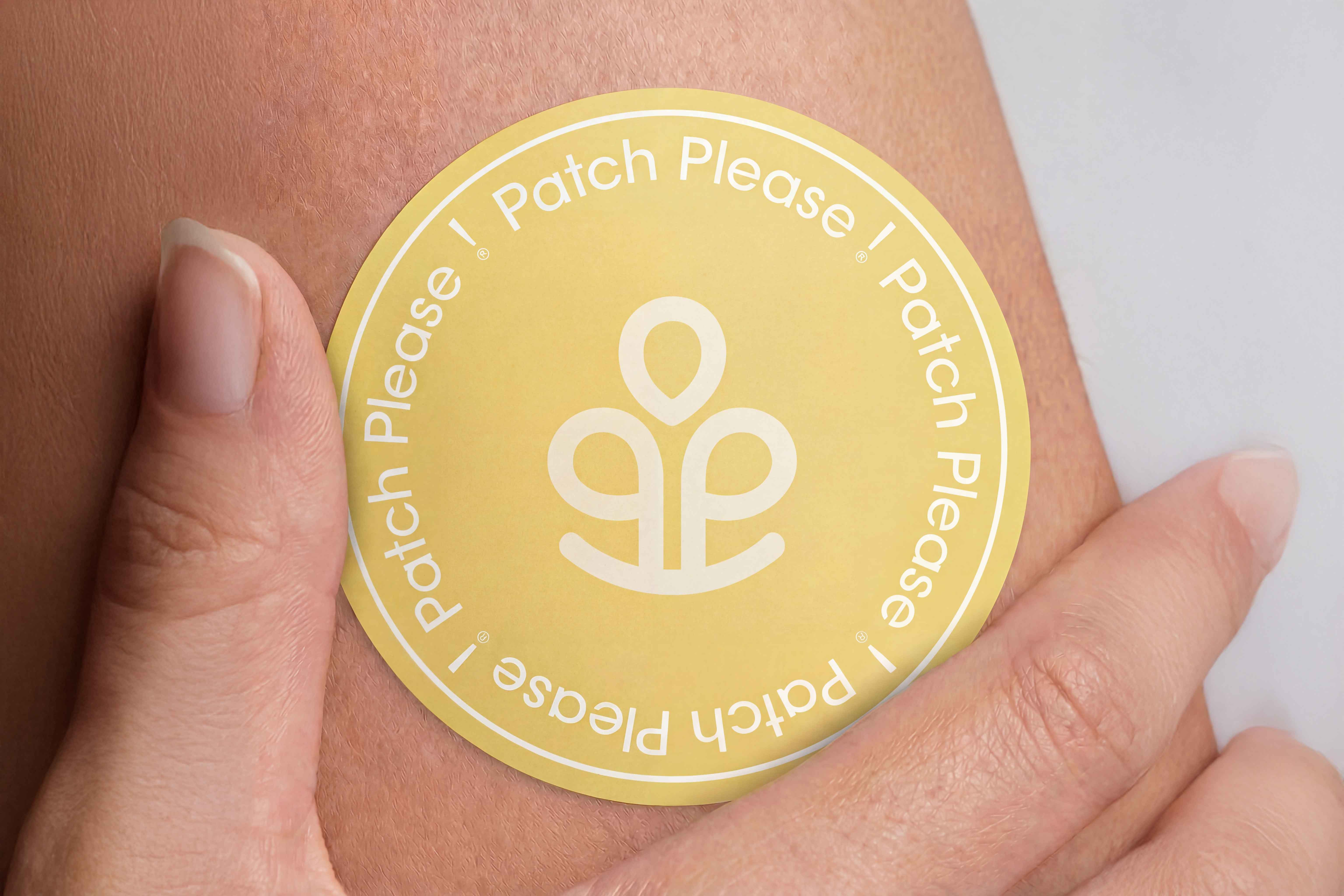
Keep your patches next to your toothbrush or coffee machine. Brush, patch, go.
Before you start, take 5 minutes for this. Just for you.
(e.g. right after brushing my teeth, at 7:30 am)
You don't have to be perfect.
You just have to start.
Kind to yourself. Curious. Consistent.
Motivation comes and goes. That's normal. What stays are habits: small actions you repeat until they happen on their own, like brushing your teeth.
So the goal is not to "fix" your mood in a day. The goal is to make feeling good a little easier, every day.
Everyone has ups and downs. A balanced mood means you bounce back a little easier, not that hard days disappear.
Five minutes of daylight, a short walk, a text to a friend. On their own they look tiny. Repeated for 30 days, they shape how your days feel.
Missing a day is part of every routine. The only rule: don't miss two in a row. Just pick it up again tomorrow morning.
Progress, not perfection. Check off what you did, not what you didn't.
These five everyday basics have the biggest influence on how you feel. You don't need to master them all. Small improvements in each one add up.
A tired brain sees everything a little darker. Aim for a regular bedtime and wake-up time, even on weekends, and put your phone away 30 minutes before bed.
Morning daylight helps set your internal clock and tells your body "it's daytime". Try 5 to 10 minutes outside within an hour of waking, even when it's cloudy.
You don't need a gym. A brisk walk, stairs instead of the elevator or a dance in the kitchen all count. Many people feel lighter right after moving.
Regular meals help keep your energy steady. Add protein to breakfast, eat plenty of plants, drink water and notice how sugar-heavy snacks or too much caffeine make you feel.
Humans are wired for connection. A short call, a coffee with a friend or a chat with a neighbor can shift your whole day.
Apply your patch in the morning, then step outside for a few minutes of daylight. Two foundations, done before 9 am.
Meet your brain's messengers.
Your brain cells talk to each other with chemical messengers called neurotransmitters. Two of them are often called "feel-good chemicals":
Serotonin is linked to feeling calm, content and balanced. It also plays a role in sleep and appetite. Daylight, regular sleep, movement and balanced meals are all part of how your body keeps it in rhythm.
Dopamine is linked to motivation, focus and the feeling of reward. It's the little "yes!" when you finish a task or look forward to something. Setting small goals and ticking them off is one everyday way to put it to work.
The Mood Please Patch supports serotonin & dopamine, your brain's natural feel-good chemicals, with 6 mood-supporting ingredients delivered through the skin. Your daily habits do the rest. That's why this guide combines both.
This page is general wellness education, simplified on purpose. Your brain chemistry is complex and individual. It is not medical advice.
Cortisol is often called the "stress hormone", but it isn't the bad guy. It naturally rises in the morning to help you get going and falls in the evening so you can wind down.
Short bursts of stress are normal and even useful: a deadline, a workout, a big conversation. The challenge is when stress stays switched on all day, with no breaks in between.
Long, slow exhales are one of the fastest ways to signal "you're safe" to your nervous system. See the reset tools on page 15.
Two minutes away from the screen every hour: stand up, stretch, look out the window.
Close the laptop, write tomorrow's top 3 tasks on paper and leave them there.
One focus per week. Every week builds on the last, and your morning patch stays the same throughout.
| Week | Focus | Daily anchor |
|---|---|---|
| Week 1 Days 1–7 |
Rhythm | Patch + 5 min morning daylight |
| Week 2 Days 8–14 |
Move | A 10-minute walk every day |
| Week 3 Days 15–21 |
Nourish & connect | Protein breakfast + one real conversation |
| Week 4 Days 22–30 |
Calm & keep | One reset tool a day + plan what you keep |
Every day: patch on, rate your mood, one small win.
Tip: on busy days, do the daily anchor only. That's enough to keep the chain going.
This week is all about a steady start. Same wake-up time, same patch moment, a little daylight. Your body loves predictability.
Drink your morning coffee or tea outside or by an open window, at least 3 times this week.
What felt easiest this week?
What do I want to keep?
Keep your Week 1 rhythm and add a little movement every day. No sportswear needed. The best movement is the one you'll actually do.
Put on one song you love and move to it. Kitchen, living room, anywhere. Notice how you feel afterwards.
When did I feel most energized this week?
Which kind of movement do I actually enjoy?
Halfway there. This week you feed your body and your social battery. Both have a bigger effect on your mood than most people think.
Send a message to someone you haven't talked to in a while. Just "thought of you today" is enough.
Who gave me energy this week?
Which food or drink made me feel better or worse?
The final stretch (days 22 to 30). This week you add short calming moments and decide which habits you want to keep for good.
Look back at your tracker from Week 1. What has changed? Circle your three best days and note what they had in common.
Once a day, ideally in the evening: tick your patch, rate your mood and energy from 1 to 5, and write down one good thing. Patterns become visible after a week or two.
| Day | Patch ✓ |
Mood 1–5 |
Energy 1–5 |
One good thing |
|---|---|---|---|---|
| Week 1 · Rhythm | ||||
| 1 | ||||
| 2 | ||||
| 3 | ||||
| 4 | ||||
| 5 | ||||
| 6 | ||||
| 7 | ||||
| Week 2 · Move | ||||
| 8 | ||||
| 9 | ||||
| 10 | ||||
| 11 | ||||
| 12 | ||||
| 13 | ||||
| 14 | ||||
| Week 3 · Nourish & connect | ||||
| 15 | ||||
| 16 | ||||
| 17 | ||||
| 18 | ||||
| 19 | ||||
| 20 | ||||
| 21 | ||||
| Week 4 · Calm & keep | ||||
| 22 | ||||
| 23 | ||||
| 24 | ||||
| 25 | ||||
| 26 | ||||
| 27 | ||||
| 28 | ||||
| 29 | ||||
| 30 | ||||
Tip: print this page or copy the table into your notes app.
For the moments when the day feels heavy. Each one takes 5 minutes or less. Pick one, do it, move on.
Breathe in through your nose for 4. Hold for 7. Breathe out slowly through your mouth for 8. Repeat 4 times.
In for 4. Hold for 4. Out for 4. Hold for 4. Picture tracing the sides of a square. Repeat 6 to 8 rounds.
Step outside, no phone in your hand. Look at things far away: trees, clouds, rooftops. Notice 3 things you hear.
Write down three things that went well today, however small. "The coffee was good" counts.
Name 5 things you see, 4 you can touch, 3 you hear, 2 you smell and 1 you taste. It brings your attention back to right now.
Screenshot this page and save it as a favorite on your phone, so your tools are always one tap away.
In the morning, as part of your routine. With the 8-hour steady release, a morning patch covers the active part of your day.
About 8 hours. Then remove it. Use 1 patch per day.
On clean, dry skin with little hair: inner wrist, upper arm or shoulder. Rotate the spot every day.
Light activity is fine. Water, sweat and lotion can loosen the patch, so press it on firmly and apply to dry skin.
No problem. Just apply your next patch the following morning. Don't double up.
Mild redness after removal usually fades quickly. If it doesn't, or the skin feels irritated, skip that spot, let it rest and stop use if irritation continues.
Please talk to your doctor before using any wellness product in these situations.
Everyone is different. That's why we suggest a full 30 days and your tracker: it shows you your own trends over time, instead of judging day by day.
This guide shares general wellness information and everyday habits. It is not a substitute for medical advice, diagnosis or treatment. Mood Please is a wellness product, not a medicine.
Everyone has low days. But if you feel low most days for more than two weeks, if your mood is getting in the way of daily life, or if something just doesn't feel right, please talk to your doctor or a licensed mental health professional. Reaching out is a strong move, not a weak one.
If you have thoughts of harming yourself, please reach out right now. In the US, call or text 988 (Suicide & Crisis Lifeline), available 24/7, free and confidential. In an emergency, call 911.
In 30 days you didn't just stick on a patch. You built a routine: morning light, more movement, better fuel, real conversations and tools for the heavy moments.
That routine is yours now. Some days it will feel easy, some days you'll miss a step. What matters is that you come back to it.
Your habits work best when they stay consistent, and that includes your morning patch. Order your next pack before your last week runs out, so there's no gap in your routine. A subscription makes it automatic.
Many people like to repeat the 30 days with a fresh tracker. Pick the week that felt hardest and give it a second go.
Congratulations on finishing your 30-Day Mood Reset. Here's to brighter days. ☀️
† These statements have not been evaluated by the Food and Drug Administration. This product is not intended to diagnose, treat, cure or prevent any disease.
 United States
|
USD
$
United States
|
USD
$
You are currently shipping to United States and your order will be billed in USD $.
 Argentina
ARS
$
Argentina
ARS
$
 Australia
AUD
$
Australia
AUD
$
 Austria
EUR
€
Austria
EUR
€
 Belgium
EUR
€
Belgium
EUR
€
 Canada
CAD
$
Canada
CAD
$
 Chile
CLP
$
Chile
CLP
$
 Denmark
DKK
kr.
Denmark
DKK
kr.
 France
EUR
€
France
EUR
€
 Germany
EUR
€
Germany
EUR
€
 Greece
EUR
€
Greece
EUR
€
 Ireland
EUR
€
Ireland
EUR
€
 Israel
ILS
₪
Israel
ILS
₪
 Italy
EUR
€
Italy
EUR
€
 Japan
JPY
¥
Japan
JPY
¥
 Mexico
MXN
$
Mexico
MXN
$
 Netherlands
EUR
€
Netherlands
EUR
€
 New Zealand
NZD
$
New Zealand
NZD
$
 Norway
EUR
€
Norway
EUR
€
 Poland
PLN
zł
Poland
PLN
zł
 Portugal
EUR
€
Portugal
EUR
€
 Singapore
SGD
$
Singapore
SGD
$
 South Africa
ZAR
R
South Africa
ZAR
R
 Spain
EUR
€
Spain
EUR
€
 Sweden
SEK
kr
Sweden
SEK
kr
 Switzerland
CHF
CHF
Switzerland
CHF
CHF
 United Arab Emirates
AED
د.إ
United Arab Emirates
AED
د.إ
 United Kingdom
GBP
£
United Kingdom
GBP
£